Most organizations are now processing hundreds to thousands of access requests per month."
The State of Data Governance in the Age of AI Report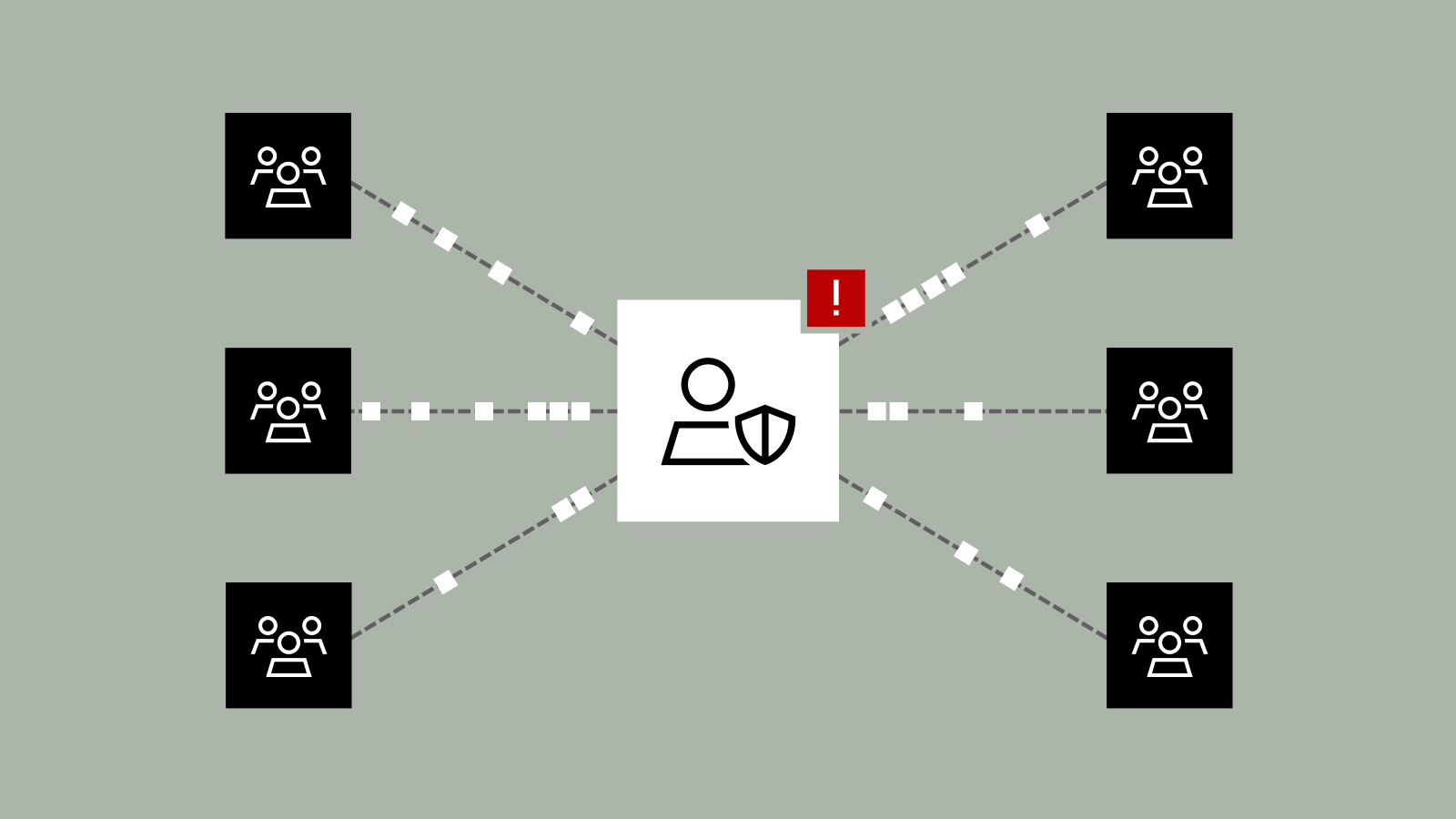
Loading the Elevenlabs Text to Speech AudioNative Player…
AI has rewritten the rules of how data is accessed and by whom. What was once the domain of data engineers and analysts is now accessible to anyone with a question – including AI agents.
But legacy models weren’t built for this influx of users. So every access request becomes a ticket. Every ticket needs a review. Every review takes time. At the end of each week, hundreds of requests are still active — and so are the people managing them.
The repercussions of this slow and endless cycle go beyond delayed insights. New research shows that data teams are feeling the pressure – and cracking beneath it. But are leaders noticing? And equally importantly, what’s been done to address it? In this blog, we’ll explore those questions and how to resolve them.
Data provisioning processes: New questions, old answers
In The State of Data Governance in the Age of AI, one finding jumped off the page: 42% of organizations still rely on ticket-based systems or email to manage data access requests.
That might have made sense when access request volumes were low. But the same survey shows most organizations are now processing hundreds to thousands of access requests per month.
That scale has transformed what used to be a workflow into a bottleneck. As new access questions emerge, they’re being addressed in the same old – and increasingly inefficient – ways. And that’s contributing to a growing burnout rate.
The data burnout equation
Every ticket for data access – via a platform like ServiceNow, for instance – triggers a similar process: a request, a review, a handoff, another review, an approval, a confirmation. And that doesn’t include the questions and conversations that happen in between. Each ticket adds to the cognitive load for data engineers, stewards, and platform owners.
Our most recent research found that half of data practitioners feel burnt out – a 5% increase from earlier this year. What does that look like in real life?
- Practitioners spend their days chasing approvals instead of enabling access.
- Leaders push for faster delivery while the administrative work piles up.
- Everyone feels like they’re losing control of the very thing governance is supposed to provide: trust.
And while practitioners are bearing the brunt of manual, ticket-based processes, leaders recognize it, too. While many expressed confidence in their governance strategies, they also admit they’re worried about their teams’ mental load.
Our findings paint a clear picture: Leaders worry about burnout; practitioners feel it acutely. The numbers differ, but the heart of the issue is the same: manual provisioning processes don’t scale, and it’s taking a toll on the people responsible for managing them.
From tickets to trust: The new look of data provisioning
The way forward isn’t less governance — it’s smarter governance. That begins with re-imagining data provisioning as a self-service function, rather than a reactive administrative task. It marks a major shift from governance being a blocker, to being an enabler of data access, insights, and innovation.
Instead of the IT team triaging access, imagine a governed data marketplace where:
- Users can request and receive data automatically based on dynamic, context-aware rules.
- Policies determine who can see what, under which conditions, and for how long.
- Attribute-based access control (ABAC) and purpose-based models ensure requests are approved or denied in real time, while every action is logged for auditability.
- When policies don’t yet cover a specific use case, integrated workflows ensure requests get routed to the right people with time-bound, auditable approvals.
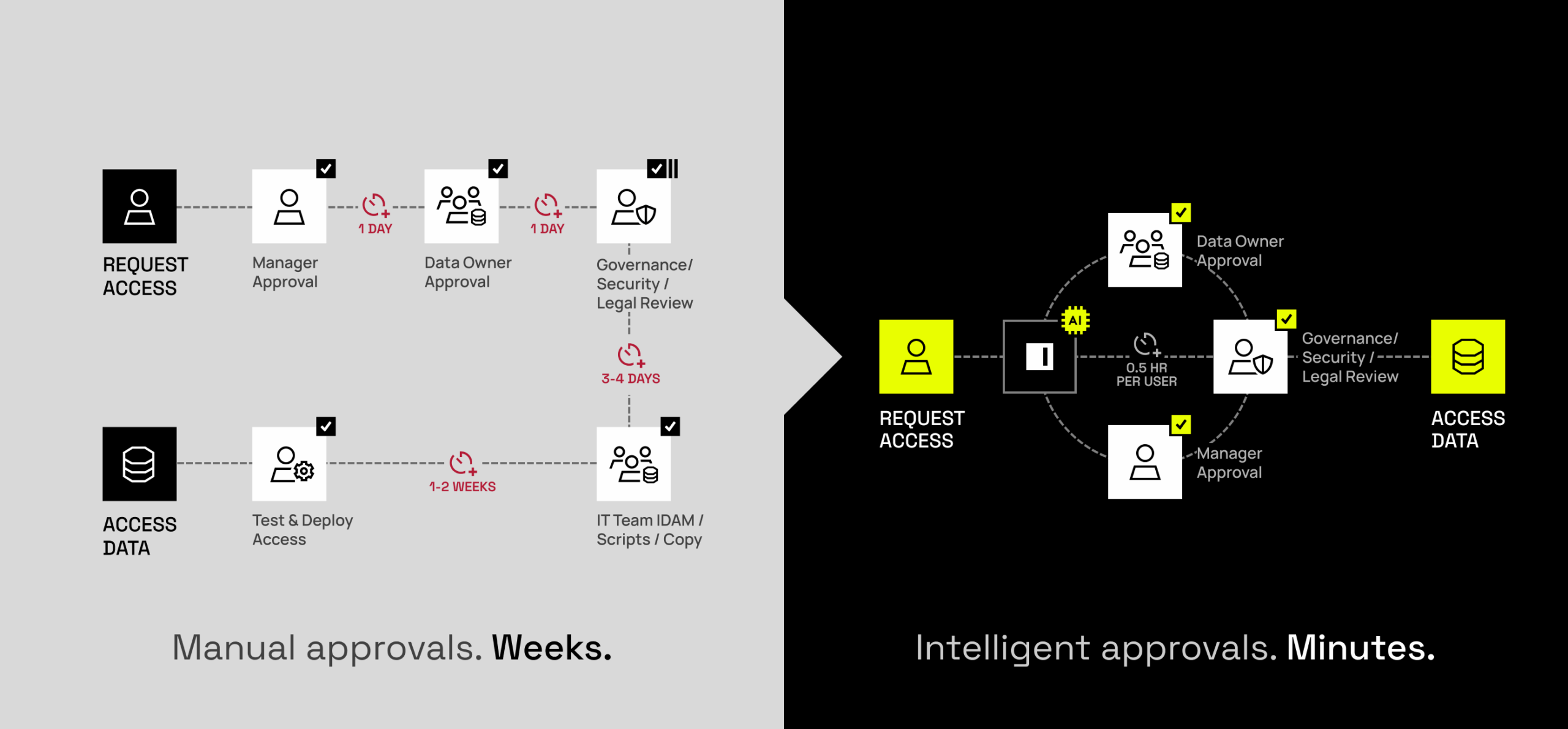
The result? Governance that scales with data demand – and frees practitioners from the burnout-inducing ticket treadmill.
Automation doesn’t replace human oversight – it preserves it. By codifying rules that humans once enforced manually, governance teams go from gatekeeping to enabling innovation. After all, how many data professionals would rather chase approvals than spend time shaping data strategy?
Setting the stage for AI-powered provisioning
Automation also sets the stage for what’s next: widespread AI adoption. As organizations integrate AI into governance processes, data access will no longer come in human-paced bursts — it will arrive in machine-paced streams. Manual workflows simply won’t keep up.
The majority of data professionals we surveyed believe AI will help reduce provisioning workloads. But only a small fraction feel prepared to govern AI-driven access. That sets up a complicated paradox: the technology that promises relief could also create new risks.
The good news? By adopting a provisioning layer with governance built in by design, you can tap into the best of both worlds, and make AI work for scalable, secure data access.
The new metric for data governance success
For years, data governance success has been measured by compliance checkboxes or audit readiness. But as workloads and burnout grow, leaders should pay attention to another emerging metric: sustainability.
A governance program that exhausts its people is as unsustainable as one that fails to scale. The leaders who recognize this are shifting their focus from controlling access to enabling it, leveraging automation, AI, and dynamic systems.
Before thinking about AI agents, leaders urgently need to focus on today’s problems: coming up with a federated governance system that efficiently handles human requests. A centralized model might work today, but if each employee has 10 agents in the future, a lot of things will break.”
Mo Plassnig, Chief Product Officer
That shift isn’t easy, but it’s necessary. The longer organizations cling to ticket queues and manual reviews, the more talent and competitive advantage they’ll lose.
Get the full picture
Our new report digs deeper into this tension between manual control and modern scalability — and specifically, the gaps to fill between leaders and practitioners. You’ll learn:
- Where leaders and practitioners align—and where they don’t.
- How governance investments are evolving as AI becomes a bigger piece of the pie.
- Why confidence is high, but operational reality is lagging.
The State of Data Governance
in the Age of AI
This new report reveals widening gaps between leaders and practitioners. Learn why modern, policy-driven provisioning is the path forward.