Organizations today face a dual challenge: accelerating access to data while ensuring that compliance and security never slip through the cracks. But many data teams are stuck in a reactive loop, responding to each and every access request to determine who should be approved versus who should be denied – and why. As the requests pile up, so does the risk of making the wrong decision.
Guardrail policies provide a powerful way to meet this challenge by defining non-negotiable eligibility rules before access decisions are made. They provide a safety net that allows data stewards and governors to get further ahead of access decisions. The result? Faster, more confident determinations that translate into faster, more confident access to data.
In this blog, we’ll see how Immuta’s guardrail policies work, and how to put them into practice across industry use cases.
What are guardrail policies?
Guardrail policies manage data access by setting prevention rules, which specify the requirements a user must meet before their access request can even be considered for approval. This approach is an alternative to dynamic, attribute-based policy enforcement (Immuta’s traditional approach), giving data stewards an upstream decision-making framework for access requests.
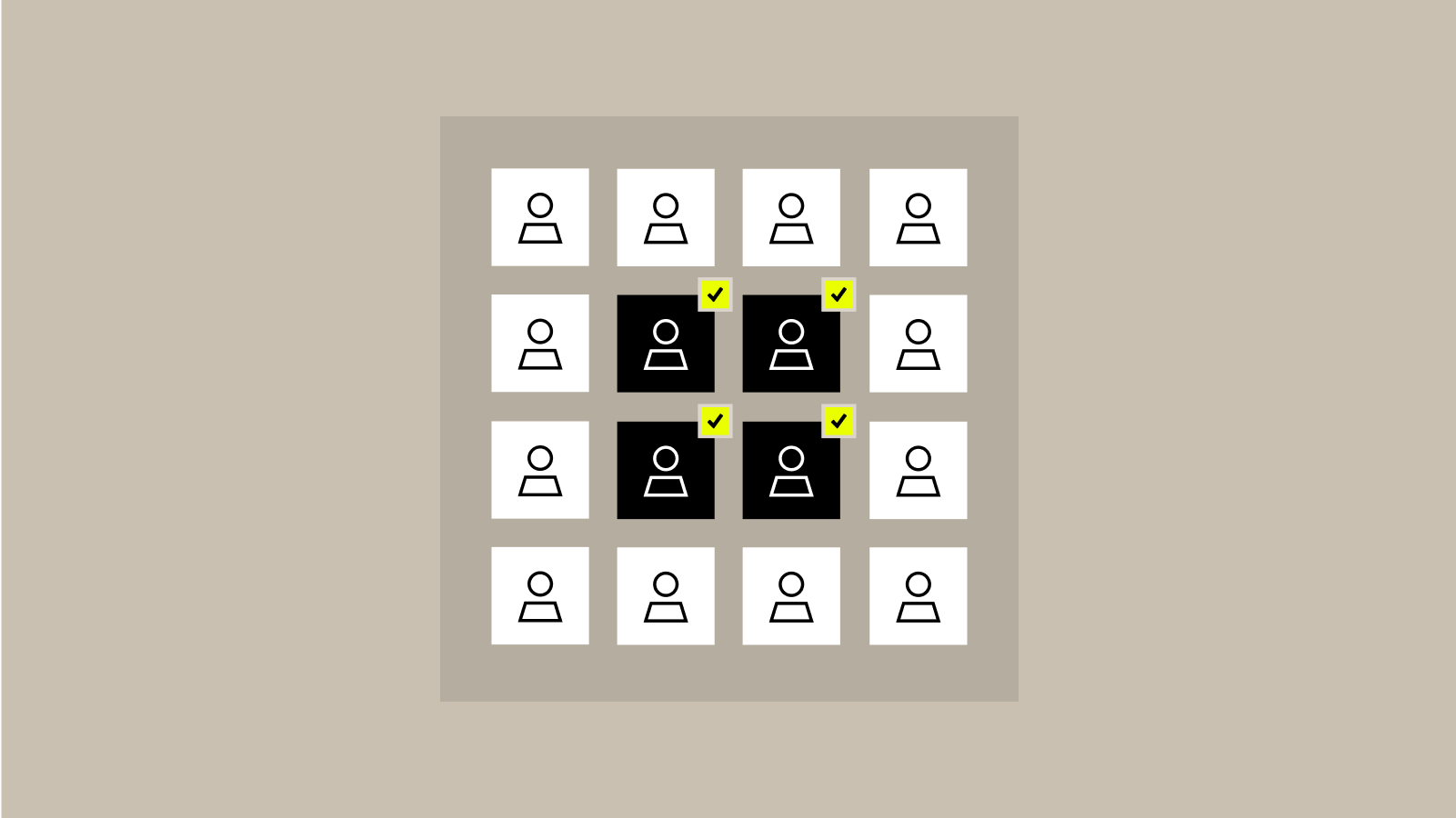
Think of guardrail policies like university admissions. Only admitted students are eligible to register for classes. That admission step is the guardrail — it defines who can participate. Within that pool of admitted students, only those who enroll and are approved actually gain access to the class.
Guardrail policies work the same way: they create the pool of users who can access data, while approval workflows or subscription policies determine who actually does.
How do I use guardrail policies?
Guardrail policies are simple in concept, but powerful in practice. Here’s how you can implement them effectively:
Define eligibility rules
Every dataset has boundaries. Based on the data’s risk, classification, or sensitivity level, or on considerations like local compliance laws, you may need to scrutinize access requests differently.
Start by asking: What is non-negotiable for accessing this data? Criteria might be:
- Completion of compliance or ethics training
- Belonging to a specific business unit (e.g., Risk, Clinical Research, or Finance)
- Residency or work in a certain country
Once identified, these requirements become your eligibility rules — the baseline that no one can bypass.
Build the guardrail policy
Next, translate those rules into enforceable logic using Immuta’s policy builder. Guardrails are expressed through attributes sourced from your existing systems, like Okta, Azure AD, or your LMS. These attributes may pertain to users (e.g. training status, department), the data itself (e.g. risk level, format), or the environment (e.g. location, usage, purpose).
For example, an eligible training status attribute may look like this:
completed_training = CRD-100235 and GOV-003319
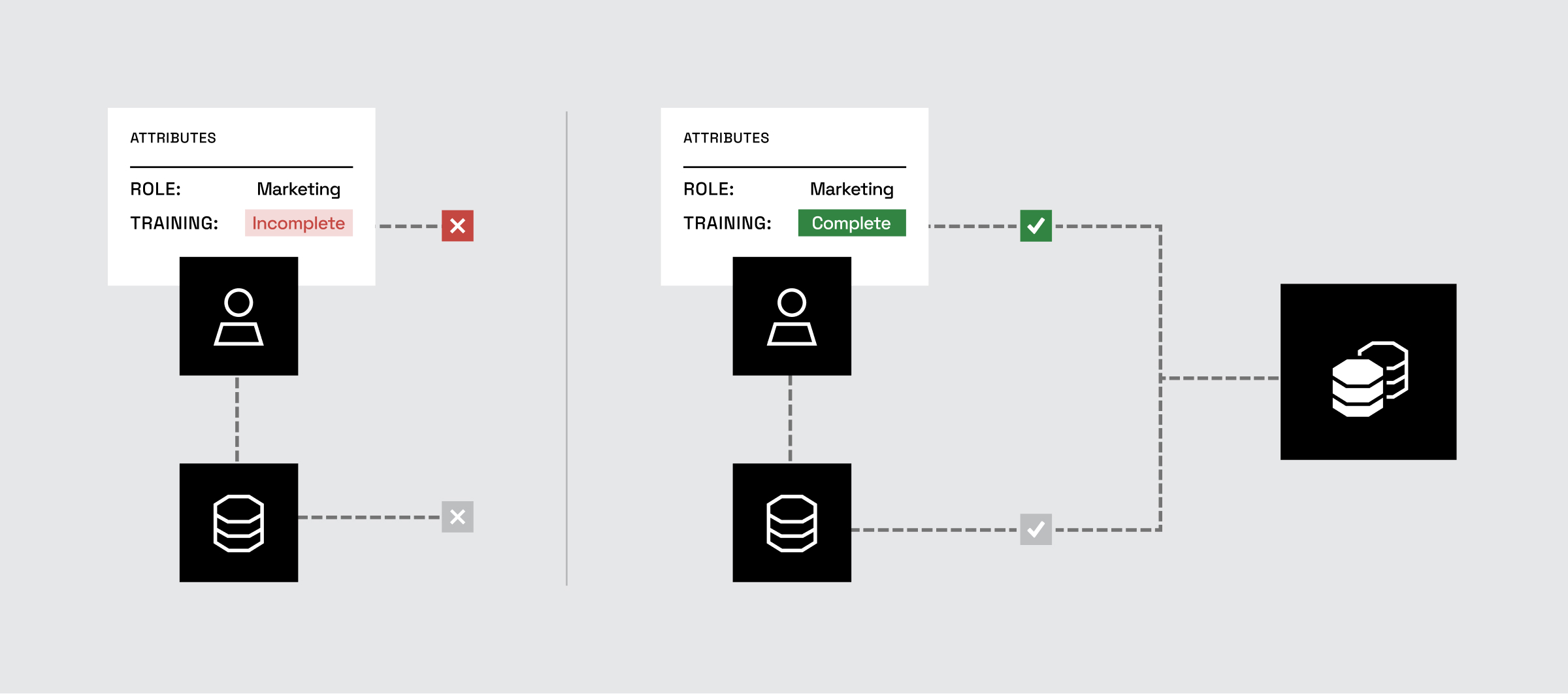
Once configured, Immuta automatically evaluates every user request against these conditions. This means guardrail policies silently enforce rules in the background, filtering out anyone who doesn’t meet the baseline requirements – no matter what approvals are granted.
Approve and monitor access
Eligibility isn’t the same as access. After the guardrail policy defines who can request access, you can layer on request-and-approve workflows or subscription policies to determine who actually does.
The important difference is that Immuta ensures even mistakenly approved users won’t slip through if they don’t meet eligibility.
Monitoring data access and activity comes naturally because guardrails are dynamic. As user attributes change — such as completing a required training, transferring departments, or moving into a new role — their eligibility updates automatically. This means:
- Access stays aligned with real conditions
- Policies remain accurate without manual intervention
- Administrators avoid the constant cleanup that static role models usually require
Guardrail policies in action: Industry use cases
Media & entertainment
A streaming company creates a guardrail policy so that only employees in the Data Science and Content Analytics departments are eligible to access watch-history data.
Marketing staff can request access, but even if approved, the guardrail prevents them from querying the data — protecting sensitive viewing information and keeping it tied to defined business functions.
- Guardrail rule: department must equal Data Science or Content Analytics
- Blocked: Marketing, Sales, and other non-analytics roles
- Outcome: Viewing data is only analyzed by teams with a legitimate business need.
Pharmaceuticals
A life sciences company applies a guardrail policy ensuring that only researchers with the proper clearance can access data classified as Confidential Clinical Research.
Attributes confirming confidentiality clearance are sourced from the organization’s identity system. Dataset tags come from the enterprise data catalog, while sensitive columns within those datasets are automatically classified through Immuta’s classification framework. This way, researchers without the right clearance are filtered out.
- Guardrail rule:
user_clearance = Confidential and dataset_classification = Confidential Clinical Research
- Blocked: Researchers lacking clearance for confidential data
- Outcome: Confidential trial data is only accessed by appropriately cleared users, protecting sensitive intellectual property and ensuring regulatory compliance.
Financial services
A global bank sets a guardrail policy requiring employees to be physically located in the same jurisdiction as the dataset before they can query sensitive transaction data. This ensures that regulations like GDPR and data residency laws are enforced consistently across teams, even if a manager mistakenly approves a request from the wrong region.
- Guardrail rule: region must match dataset jurisdiction
- Blocked: Employees outside the approved geography
- Outcome: Transaction data is automatically aligned with residency regulations.
Why guardrail policies matter
Guardrail policies matter because they give data stewards and governors a proactive way to shape access decisions before they even reach the approval stage – eliminating much of the uncertainty, fact-finding, and guesswork that typically accompany data access requests. Ultimately, this allows them to move from reactive gatekeeping to proactive governing.
Guardrail policies also strike a critical balance between agility and governance – a major consideration, considering 62% of data professionals say governance processes delay speed to access. They do this by delivering:
- Scalability: Eligibility rules apply consistently across thousands of users and data products without adding operational overhead.
- Confidence: Sensitive data remains secure, even if approvals are made in error.
- Federated governance: Global guardrails let central data governors set non-negotiable eligibility requirements, while domain data owners (Finance, Clinical, HR, etc.) can still manage their own approval workflows and local subscription policies within those boundaries.
By embedding eligibility checks into the foundation of data access, organizations can scale data use responsibly, enabling innovation while safeguarding trust.
Final thoughts on guardrail policies
Guardrail policies aren’t just another policy type – they’re the first step in a secure access flow. By defining who can even be considered for data access, guardrail policies help you reduce risk, improve compliance, and make it safe to scale data use across Snowflake, Databricks, and other leading data platforms.
The takeaway is simple: set the boundary once, and let Immuta enforce it automatically. Guardrail policies ensure your data strategy remains both innovative and compliant.
Take a closer look.
Learn more about implementing guardrail policies.