Your AI moves fast.
Is it governed?
The EU AI Act is putting new focus on how enterprises govern the data behind AI.
The EU AI Act is putting new focus on how enterprises govern the data behind AI.
Most organisations have invested in AI. Fewer have built the authorization layer needed to demonstrate control, accountability, and auditability.
The challenge isn’t building AI. It’s proving how data was accessed, governed, and audited throughout its lifecycle.
The EU AI Act is adding urgency to how enterprises govern data access for AI.
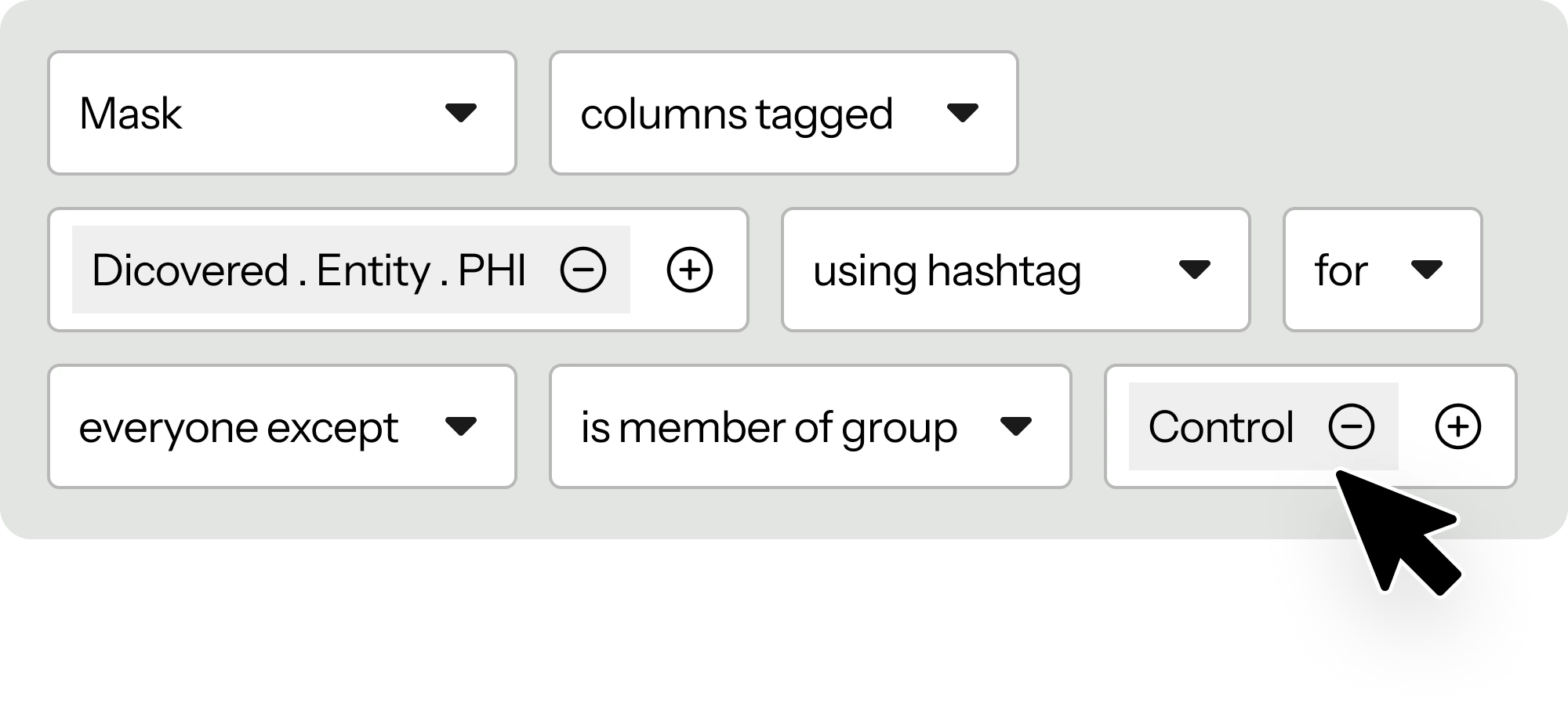
Immuta makes access policy-driven, temporary, delegated, and provable for people, applications, and AI agents.

The EU AI Act brings new focus to documented data governance, logging, transparency, oversight, and accountability around AI systems.
If data authorization and audit trails are still built around manual processes and human-paced workflows, the honest answer to most of these questions is: not easily
Could You Answer These Questions Today?
Governed data access helps teams support AI workflows without turning every request into a ticket.

Know who accessed what, on whose behalf, and under which policy.
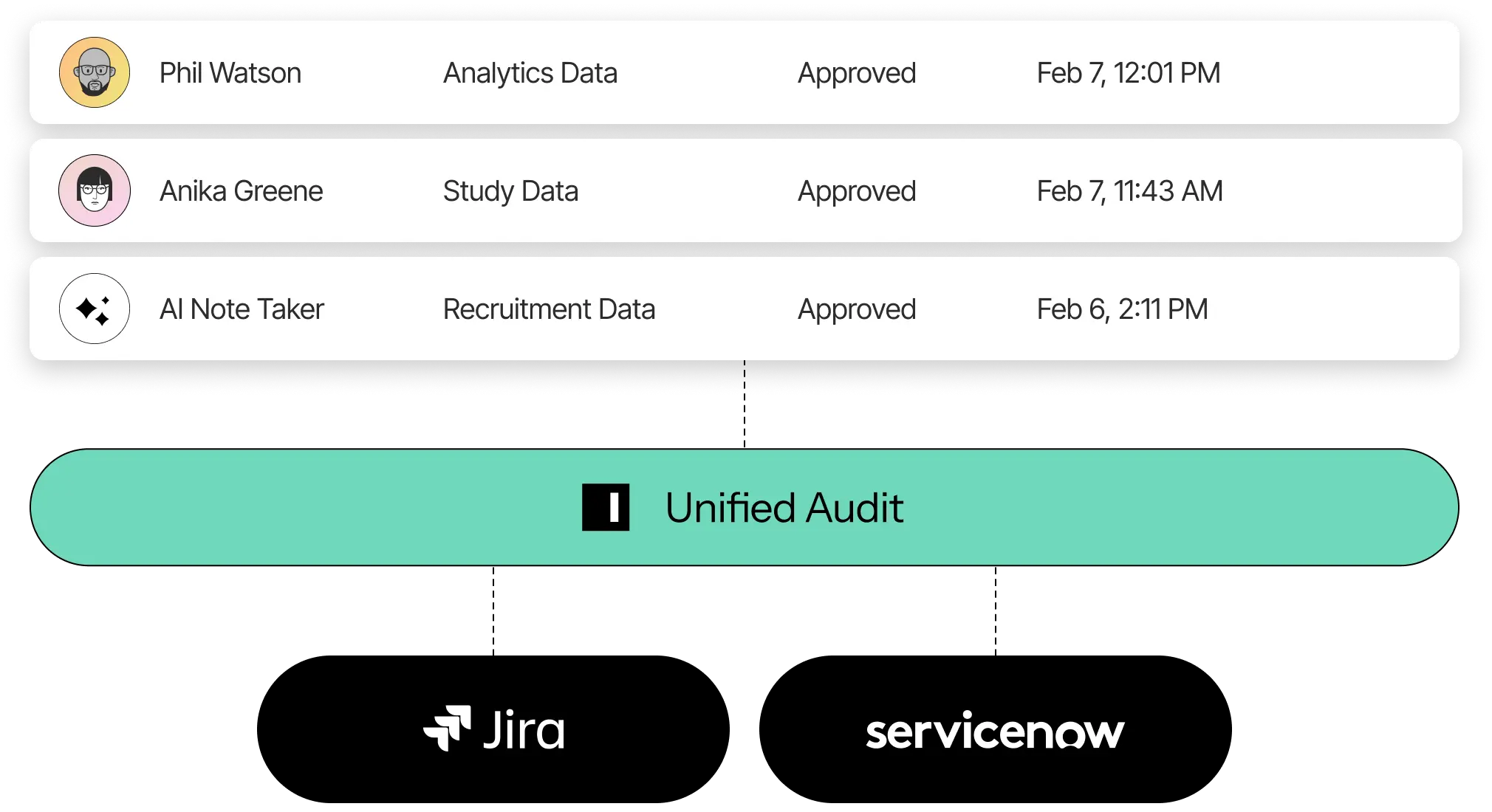
Replace manual governance work with policy-driven access that can keep pace.


See what governed data access for AI looks like in practice for your systems, platforms, and agentic workflows.
Humans request through catalogs and marketplaces. Agents request at question time.
Immuta evaluates policy and risk, and makes a determination or routes for human review.
Access is turned on at the source, scoped to the request, and captured for audit.
No more borrowing human accounts. Agents have their own explicit identities.
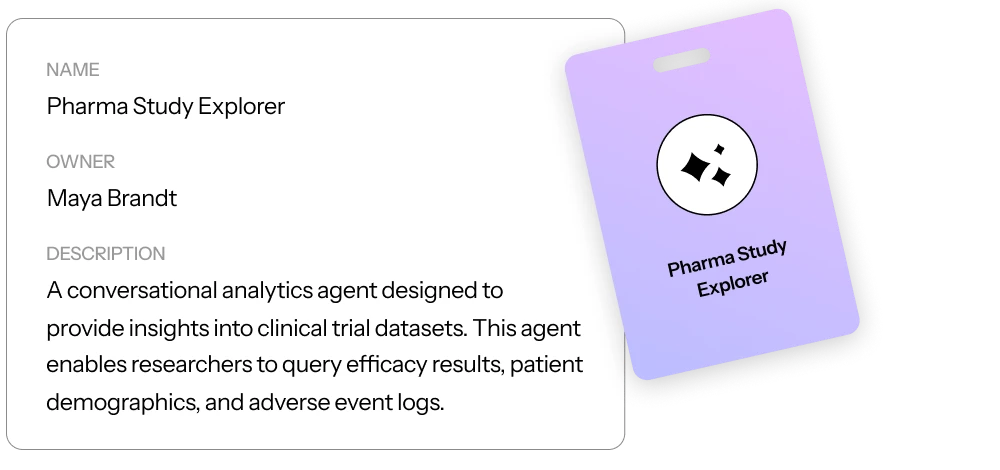
Delegated authorization keeps both identities visible and auditable when an agent acts for a user.

A temporary role is vended for the task, then removed when the task ends.

A user asks an agent to work with enterprise data. The agent presents its explicit identity and the user it serves.
Immuta evaluates identity, delegation, data, intent, context, and policy.
The data authorization determination is enforced at the data source through a temporary, traceable role.
When the task ends, the role drops, leaving a dual-identity audit trail showing who acted, on whose behalf, under which policy, and what result was returned.