
Govern centrally,
enforce globally.
Define policies easily, and enforce them instantly across all your data platforms. No coding, no role sprawl, no policy gaps, and no slow-down of performance.
Define policies easily, and enforce them instantly across all your data platforms. No coding, no role sprawl, no policy gaps, and no slow-down of performance.
Immuta applies policy-based access controls natively in each data platform, controlling data at the moment it’s accessed, inside the system that serves it. You get real-time, consistent, governance without gaps, duplication, or role sprawl.







Connect your identity systems to create policy-ready identity metadata.
Ingest and classify metadata while identifying sensitive data and risk tiers.
Define policies to govern how your data is accessed and used.
Activate policies and enforce them instantly across all data platforms.
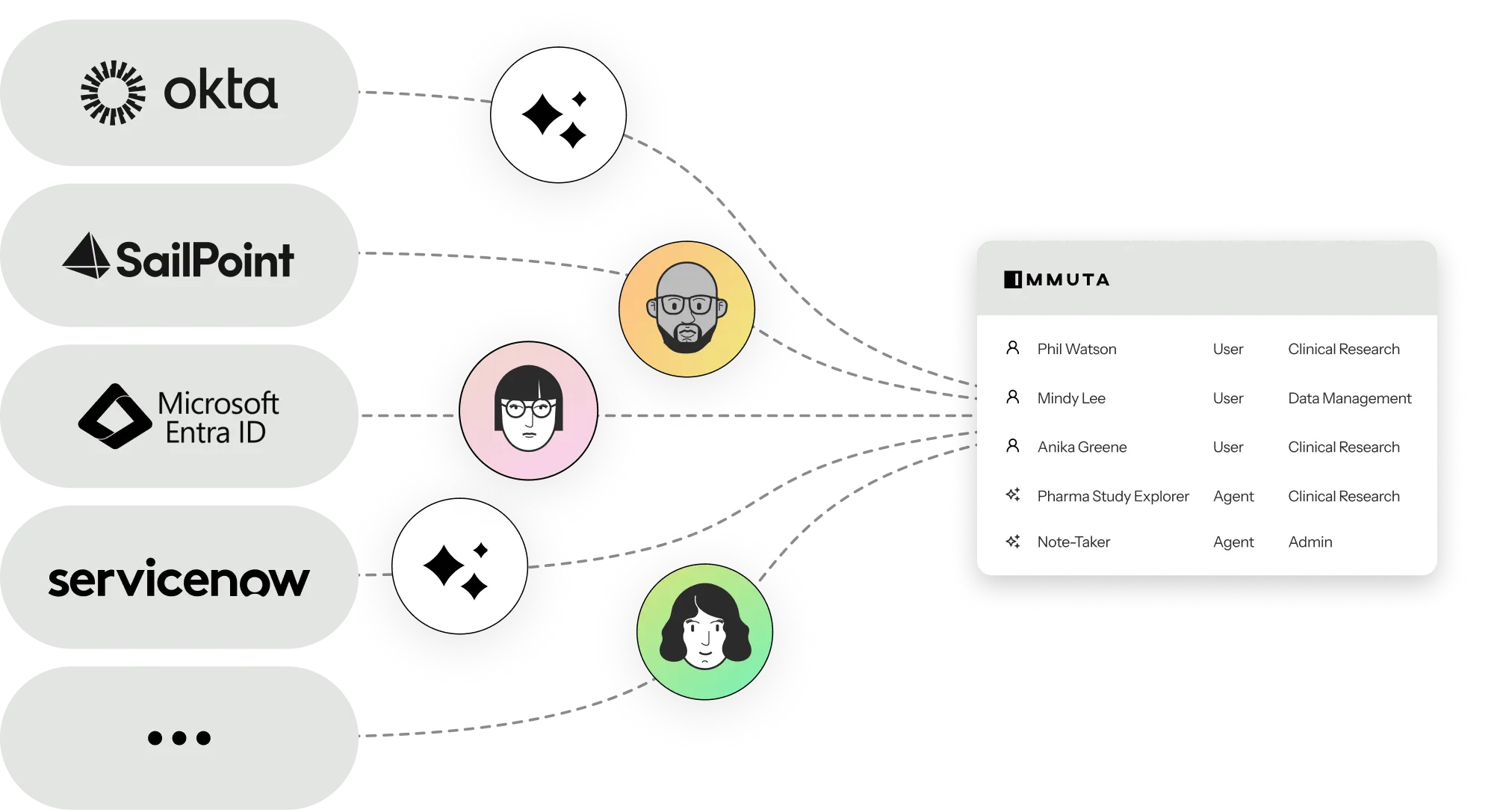
Connect to leading identity and IGA providers like Okta, SailPoint, and Microsoft Entra ID to register humans and AI agents in Immuta. Immuta uses their identity metadata — attributes, groups, and entitlements — alongside policies to make precise, real-time access decisions.
Scan tables, files, and other data assets using regex or AI-based logic to detect sensitive information, including direct identifiers and indirect identifiers that could reveal someone’s identity when combined with other data. Immuta then recommends classifications — such as risk tiers — to create policy-ready data.

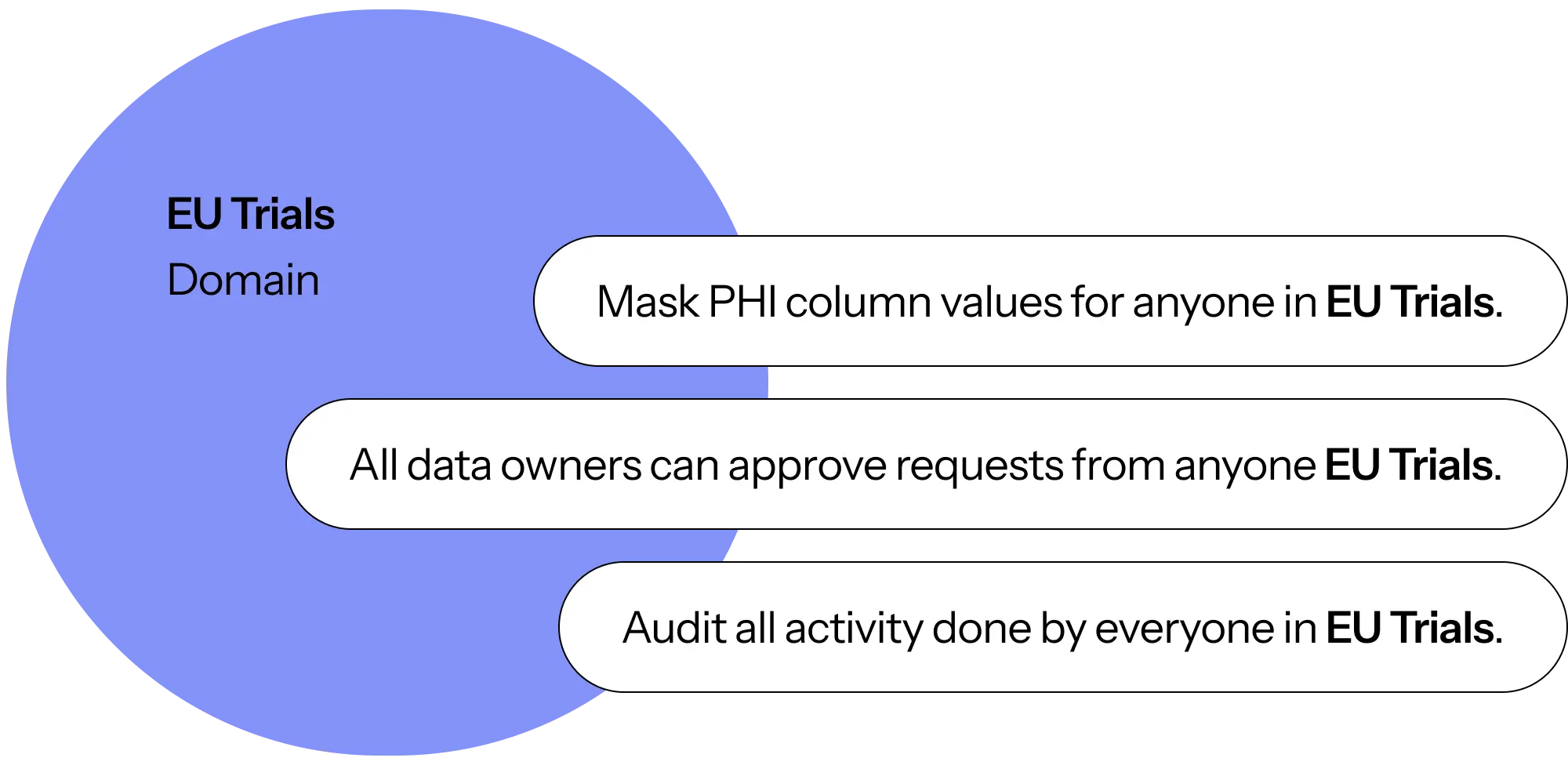
Group data assets into domains that reflect how your business actually operates. Domains make it easier to assign ownership, scale governance, and apply the right policies in the right business context.
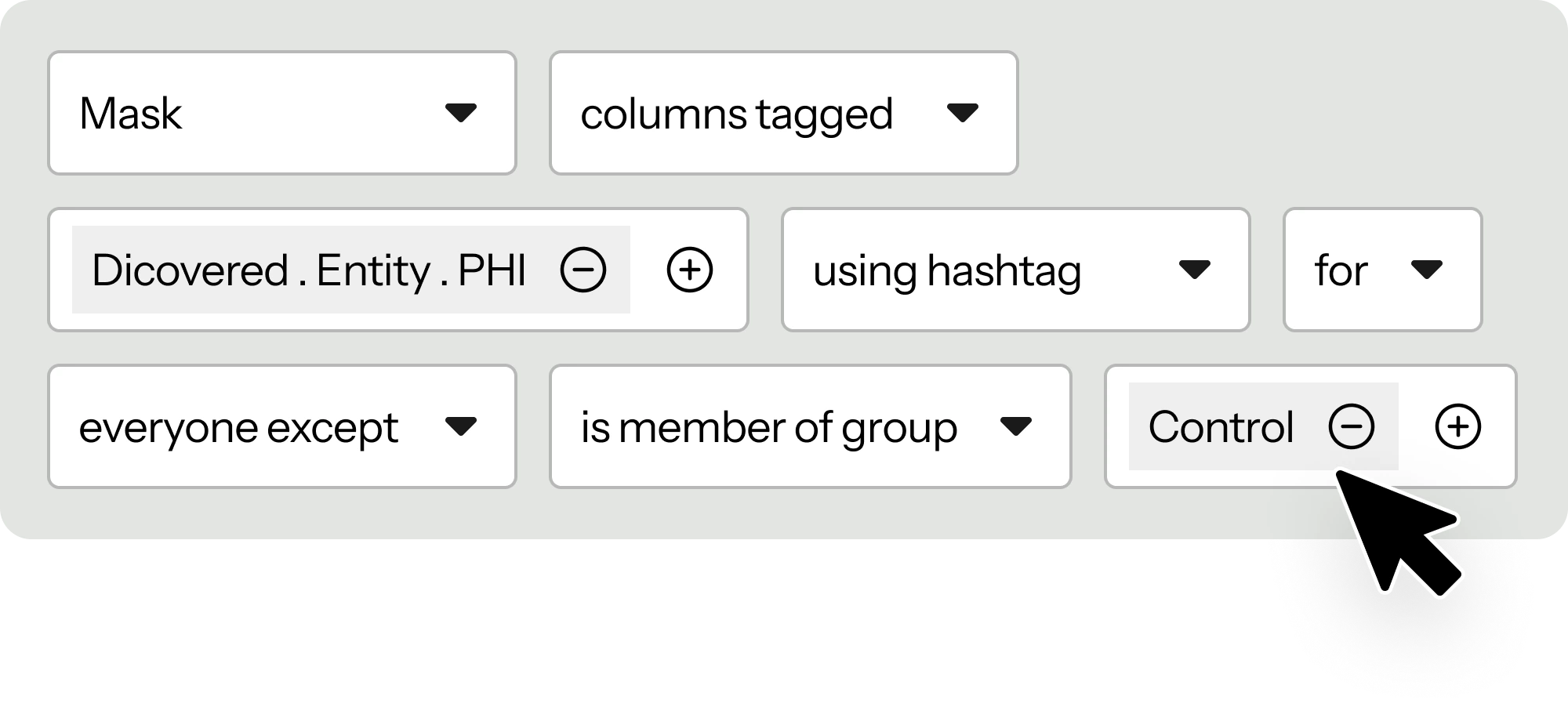
Immuta’s natural language policy editor allows non-technical users to author the full range of Immuta policies — subscription policies, enterprise guardrails, or fine-grained controls — without code. This frees up technical teams, and makes policies clear and understandable for everyone.
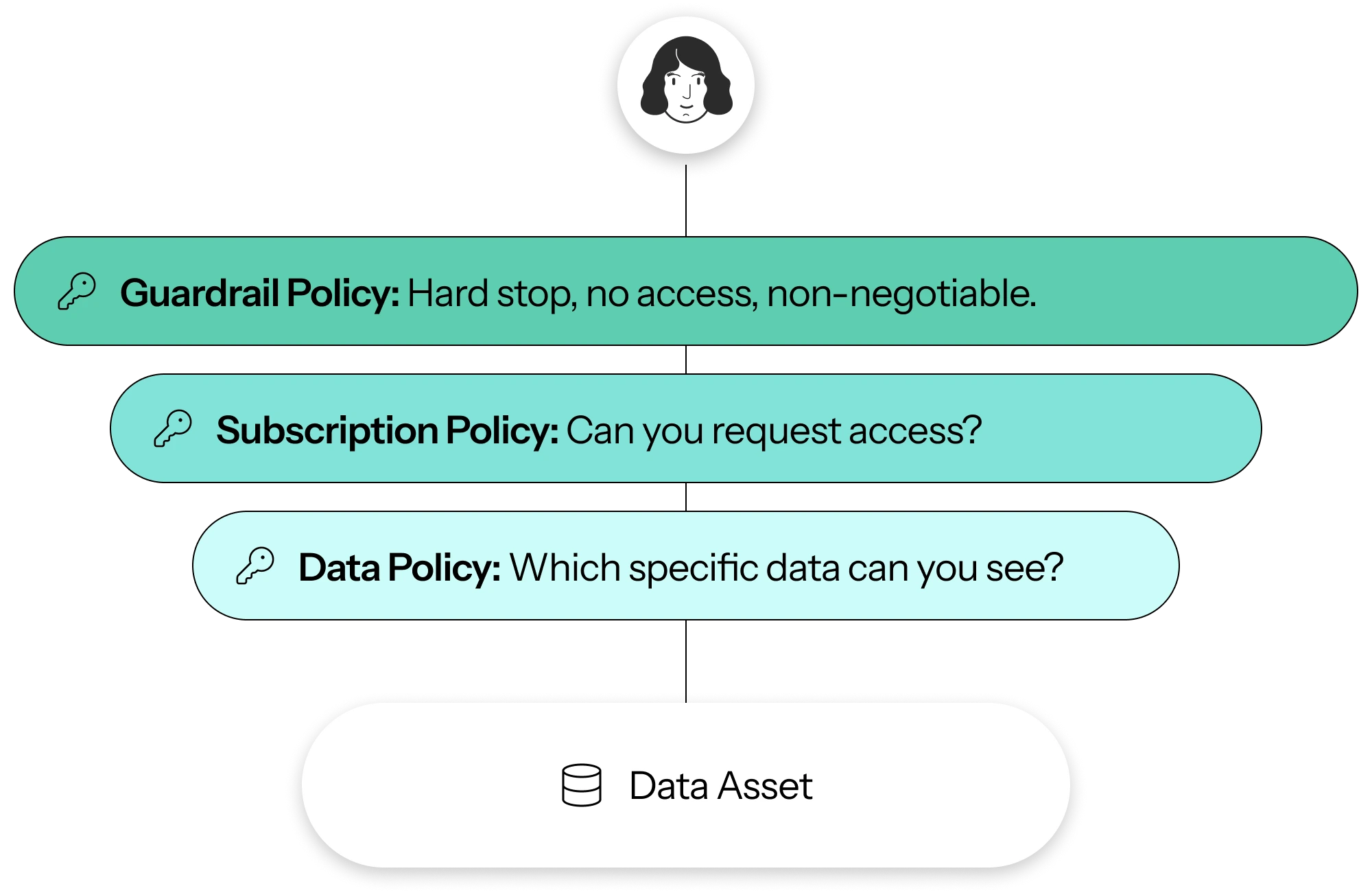
Apply the right level of control for every access scenario. Guardrail policies set non-negotiable limits, blocking unsafe access upfront. Subscription policies determine who can request access. And data policies govern data visibility through row-level restriction, column-level masking, purpose-based controls, and more.
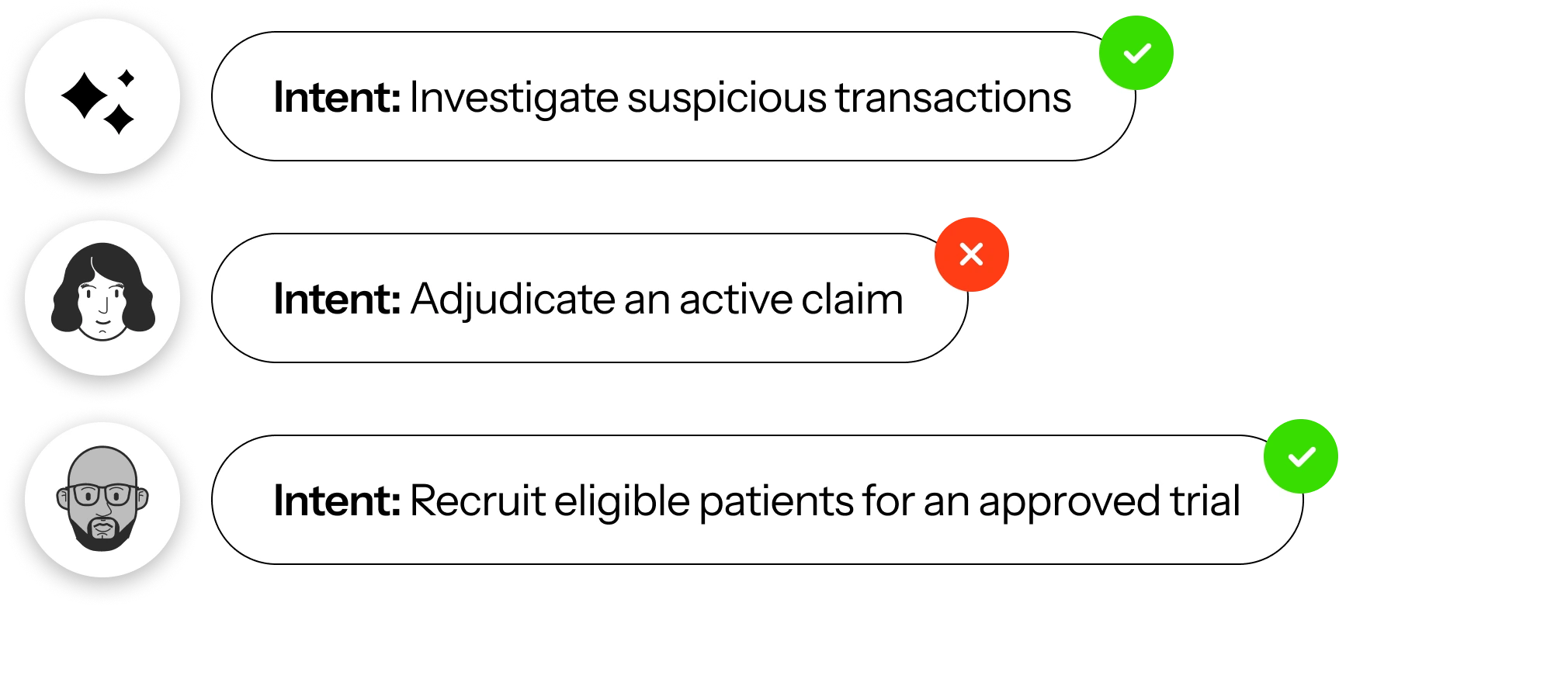
Define the specific purposes or projects that allow access, and tie data use to those intents. Humans and AI agents can only access data for approved intents, with clear guardrails and accountability.
Immuta AI analyzes access patterns and data context to recommend smart policies that reduce request volume, and automate low-risk access. It also suggests policy-ready metadata, classifications, and tags.

Immuta enforces policies instantly and natively in all your data platforms. Access controls, masking, and redaction are applied in real time without delays, manual updates, or gaps in enforcement. A unified audit trail provides complete visibility across all your data platforms.